
Hey there, fellow truth-seekers! Have you ever found yourself pondering the fundamental ideas that underpin our societies? Or perhaps wondered why certain political arguments just keep resurfacing, generation after generation?
Trust me, I’ve been there, lost in thought, trying to connect the dots between historical philosophy and our current chaotic world. It’s truly fascinating how the brilliant minds of thinkers like John Locke, Niccolò Machiavelli, or Hannah Arendt still resonate so deeply, providing frameworks for everything from our everyday freedoms to the grand strategies of nations.
I’ve personally found that delving into their works isn’t just about history; it’s like gaining a secret decoder ring for understanding today’s headlines, from evolving democracies to the intricate dance of international relations.
We’re living in a time of unprecedented change, with AI and climate change reshaping our political landscapes, and truly understanding these foundational thinkers helps us anticipate what’s next.
It’s an empowering experience, offering clarity amidst complexity. Let’s uncover these vital insights together and truly see how these timeless ideas shape our collective future!
The Enduring Echoes of Liberty and Order
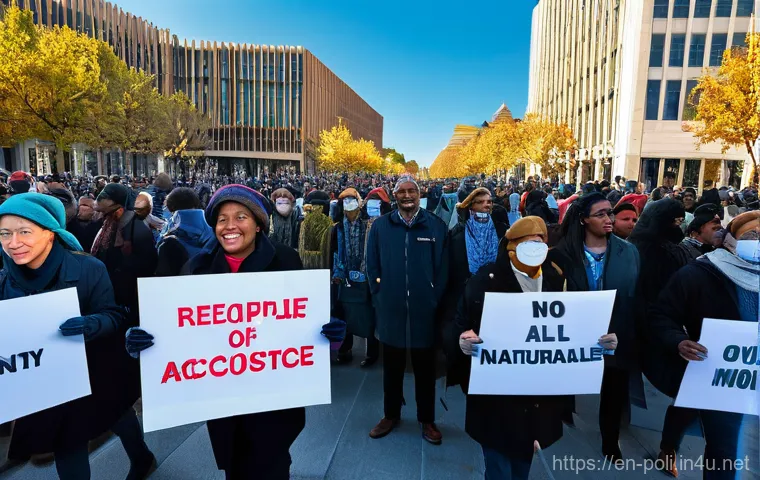
Tracing Freedom’s Roots: From Ancient Polis to Modern Democracy
You know, it’s wild to think about how much of our everyday concept of freedom isn’t just some recent invention, but something deeply rooted in centuries of thought.
I remember when I first really dug into texts from ancient Greece, like Plato’s *Republic* or Aristotle’s *Politics*, and I was genuinely surprised by how many of their discussions about justice, citizenship, and the ideal state still feel incredibly relevant.
They were wrestling with questions about who gets to participate, what true freedom looks like, and how to balance individual desires with the needs of the community – issues we’re *still* grappling with in our modern democracies.
It’s not just abstract philosophy; it’s the very foundation of how we build our societies. For instance, the idea of deliberation and public discourse, so central to ancient Athenian democracy, feels more vital than ever when we see the polarization in today’s political landscape.
It really makes you appreciate the long, winding road we’ve traveled to get where we are, and how fragile these freedoms can sometimes be, requiring constant vigilance and participation from all of us.
I’ve found that understanding these historical underpinnings gives me a much deeper appreciation for the ongoing debates about human rights and civil liberties around the world, whether it’s about freedom of speech or privacy in the digital age.
The Lockean Legacy: Rights, Government, and the Individual
When we talk about individual rights and the role of government, it’s almost impossible to ignore John Locke. I mean, his ideas, especially those laid out in his *Two Treatises of Government*, truly shifted the paradigm.
He argued that we’re all born with natural rights – life, liberty, and property – and that government exists precisely to protect those rights, deriving its legitimacy from the consent of the governed.
This wasn’t just some academic theory; it was a revolutionary concept that inspired movements for independence and democratic reforms across the globe, from the American Revolution to countless other struggles for self-determination.
I’ve often thought about how profoundly this perspective still shapes our expectations of government today. When we protest against unjust laws or demand accountability from our leaders, we are, in a way, channeling Locke’s spirit.
It’s like he gave us the vocabulary to articulate our grievances and our aspirations for a just society. His work really underscores the idea that power ultimately resides with the people, and that government is a servant, not a master.
This foundational understanding is crucial, especially in an era where the balance between state authority and individual freedom is constantly being tested by new technologies and global challenges.
It reminds us that our freedoms are not gifts, but inherent entitlements.
The Unvarnished Truth About Power
Machiavelli’s Mirror: Leadership in a Complex World
Now, if you want a dose of brutal honesty about power, you absolutely have to read Machiavelli’s *The Prince*. Forget all the flowery language and idealistic notions; Machiavelli looks at the world exactly as it is, not as we wish it would be.
He basically says, “Look, if you want to be a successful leader, you sometimes have to be willing to do things that aren’t pretty.” It’s not about being evil, necessarily, but about being pragmatic and understanding human nature, which he saw as inherently self-interested.
I remember reading it for the first time and feeling a bit shocked by his recommendations, but then I started seeing reflections of his advice everywhere, from corporate boardrooms to international diplomacy.
He taught me that effective leadership often requires a very clear-eyed assessment of reality, a willingness to adapt, and sometimes, a tough hand. He really challenges us to think about the difference between what we *say* we value in leaders and what actually *works* to maintain stability and achieve objectives.
It’s a tough pill to swallow for some, but I personally found it incredibly insightful for understanding the dynamics of power, not just in politics, but in any situation where people are trying to influence outcomes.
It’s like he ripped off the polite veneer and showed us the machinery underneath.
The Art of Influence: Staying Relevant in Shifting Sands
Machiavelli’s insights aren’t just for princes and presidents; they’ve got real-world applications for anyone trying to navigate complex social and professional landscapes.
Think about it: understanding motivations, anticipating reactions, and strategically positioning yourself – these are all skills that Machiavelli implicitly encourages.
I’ve often applied a Machiavellian lens, not to be manipulative, but to better understand the forces at play in various situations, whether it’s a community initiative, a high-stakes negotiation, or even managing a team project.
It’s about being astute, recognizing leverage points, and knowing when to be assertive versus when to concede. His work teaches you to observe, to be adaptable, and to understand that reputation and public perception are incredibly powerful tools.
In today’s fast-paced world, where narratives can shift in an instant and public opinion can turn on a dime, knowing how to manage perceptions and adapt your approach is more crucial than ever.
It’s not about being ruthless, but about being smart and resilient, always thinking a few steps ahead to protect your interests and achieve your goals in a world that rarely plays by idealistic rules.
It’s about being effective, period.
The Social Contract: Our Unspoken Agreements
Forging Community: Hobbes, Rousseau, and the Collective Good
Have you ever stopped to think about why we even bother having governments or societies at all? It’s a pretty fundamental question, and it’s one that thinkers like Thomas Hobbes and Jean-Jacques Rousseau tackled head-on with their ideas of the “social contract.” Hobbes, coming from a time of intense civil strife, famously argued that without a strong, central authority – a Leviathan – life would be “solitary, poor, nasty, brutish, and short.” He believed we essentially give up some of our individual freedoms in exchange for the security and order that government provides.
Rousseau, on the other hand, had a more romantic view of humanity, suggesting that in our natural state, we were free and noble, but society corrupted us.
He proposed that a legitimate government arises from the “general will” of the people, where we collectively agree to abide by laws that benefit everyone.
It’s a fascinating contrast, and I’ve often found myself leaning into one or the other depending on the situation. For instance, during a crisis, the Hobbesian need for order becomes incredibly apparent, while in times of stability, the Rousseauian ideal of collective participation and shared governance feels more attainable.
It’s these foundational ideas that underpin so many of our civic duties and rights, making us ponder the delicate balance between personal liberty and the common good.
Modern Dilemmas: Balancing Individual Freedom and Societal Needs
The concept of the social contract isn’t just a historical curiosity; it’s a living, breathing framework that shapes our daily lives and constantly surfaces in contemporary debates.
Think about public health mandates, for example. When governments implement measures like mask mandates or vaccine requirements, they’re essentially invoking a version of the social contract: individual actions have collective consequences, and sometimes, for the greater good, we agree to certain restrictions.
I’ve seen this play out in countless discussions amongst my friends and in online communities. Where do we draw the line? How much individual liberty are we willing to surrender for collective safety or prosperity?
This tension is also evident in environmental regulations, tax policies, and even discussions around free speech versus hate speech. My personal take is that understanding these philosophical underpinnings helps us engage more thoughtfully in these conversations, moving beyond simple emotional reactions to grasp the deeper principles at stake.
It’s about recognizing that our societies are built on a series of implicit agreements, and that these agreements are constantly being renegotiated and redefined by our evolving values and circumstances.
It’s a messy, complex, but ultimately essential dance to keep our communities functioning.
| Philosopher | Key Idea/Contribution | Relevance Today |
|---|---|---|
| John Locke | Natural Rights (Life, Liberty, Property), Consent of the Governed | Foundational for constitutional democracies, human rights advocacy, debates on individual freedoms. |
| Niccolò Machiavelli | Pragmatic Exercise of Power, Realpolitik | Understanding leadership strategies, international relations, corporate power dynamics, and political maneuvering. |
| Thomas Hobbes | Social Contract (Security over Freedom), Leviathan | Debates on state authority, law and order, public safety measures, and the necessity of government. |
| Jean-Jacques Rousseau | General Will, Popular Sovereignty | Ideas of collective self-governance, direct democracy, and the pursuit of common good in policy-making. |
| Hannah Arendt | Banality of Evil, Importance of Thought & Action | Critiques of totalitarianism, emphasis on critical thinking, civic participation, and resistance to moral disengagement. |
The Human Condition and the Political Sphere
Arendt’s Insight: The Banality of Evil and the Power of Thought
Hannah Arendt is one of those thinkers whose work absolutely blew my mind and changed how I viewed the world, particularly her observations on totalitarianism and what she famously called “the banality of evil.” Her reporting on the Eichmann trial in Jerusalem revealed that evil isn’t always monstrous or demonic; sometimes, it’s carried out by ordinary people who simply aren’t thinking, who are just following orders without reflecting on the moral implications of their actions.
This idea deeply resonated with me because it makes the threat of evil so much more accessible, not in a comforting way, but in a way that urges constant vigilance and personal responsibility.
It forced me to consider how easily good people can become complicit if they disengage from critical thought and civic participation. I often reflect on her emphasis on the importance of “thinking” as a fundamental human activity and a bulwark against oppression.
It’s not just about accumulating facts, but about actively engaging with ideas, questioning authority, and forming independent judgments. Her work has truly empowered me to be more critical, to seek deeper understanding, and to never shy away from engaging in the public sphere, because that’s where our freedom truly resides.
Action, Speech, and the Public Space: Keeping Democracy Alive

Arendt wasn’t just about identifying problems; she was passionate about solutions, emphasizing the vital role of “action” and “speech” in maintaining a vibrant public life and preventing the slide into totalitarianism.
She believed that when people come together, engage in dialogue, and act collectively, they create a space where true freedom and political innovation can flourish.
I’ve personally seen the power of this in grassroots movements and local community initiatives. When individuals feel empowered to speak up, organize, and participate, it strengthens the fabric of democracy from the ground up.
It’s not just about voting every few years; it’s about continuous engagement, thoughtful deliberation, and the willingness to stand up for what you believe in.
Her insights are particularly poignant in our current digital age, where public discourse often feels fragmented and polarized. Arendt would probably argue that we need to actively cultivate spaces – both online and offline – where genuine dialogue and collective action can happen.
It’s a reminder that democracy isn’t a spectator sport; it requires active, thoughtful participation from all of us, constantly creating and recreating the public realm where our shared future is forged.
Navigating the Modern Political Landscape
Artificial Intelligence and the Future of Governance
Okay, let’s talk about something that’s probably on all our minds: AI. It feels like every other day there’s a new development, and while the potential is absolutely incredible, I can’t help but think about how these technological advancements intersect with the foundational political ideas we’ve been discussing.
How do Lockean rights fare in an age of ubiquitous surveillance powered by AI? What does Machiavelli’s advice about maintaining power look like when algorithms can influence public opinion on an unprecedented scale?
It’s genuinely a new frontier, and I’ve found myself pondering the ethical and political implications of AI on everything from democratic processes to individual liberties.
We’re facing questions about algorithmic bias, the concentration of power in tech giants, and the very definition of human agency when intelligent systems are making more and more decisions.
It’s not just sci-fi anymore; it’s our reality, and understanding the core tenets of political philosophy gives us a crucial framework for navigating these uncharted waters.
I truly believe that without a strong grounding in these timeless ideas, we risk building a future that inadvertently undermines the very principles of justice and freedom that so many thinkers fought to establish.
Climate Change: A Global Challenge for Political Will
Beyond AI, another massive challenge that constantly brings political philosophy into sharp relief is climate change. This isn’t just an environmental issue; it’s a deeply political one, testing the limits of our social contracts, international cooperation, and even our understanding of justice across generations.
Who bears the responsibility? How do we balance economic development with environmental protection? These are questions that force us to reconsider our obligations not just to our fellow citizens, but to humanity as a whole and to future generations.
I’ve often thought about how thinkers like Rousseau might approach the “general will” in a global context, or how Arendt would discuss the collective action needed to address such an existential threat.
It requires an immense amount of political will, a willingness to compromise, and a global solidarity that often feels elusive. My own experience has shown that bridging these divides requires not just scientific understanding, but a profound appreciation for different cultural values and political systems, and a commitment to finding common ground.
It’s a testament to the enduring relevance of political philosophy that we turn to these frameworks to even begin to grapple with problems of this magnitude.
Reclaiming Our Voice: Active Citizenship in a Complex World
Beyond the Ballot Box: Everyday Engagement
In a world that often feels overwhelmingly complex, it’s easy to feel like our individual voices don’t matter. But honestly, I’ve come to realize that the vibrant political life that thinkers from ancient Greece to Arendt championed isn’t just about casting a vote every few years.
It’s about a continuous, active engagement with our communities and the broader society. This means everything from staying informed and critically evaluating information – a skill that feels more vital than ever in the age of misinformation – to participating in local town halls, volunteering for causes you believe in, or simply having thoughtful conversations with your neighbors.
It’s in these everyday acts that the true spirit of democracy lives and breathes. I’ve personally found that the more I engage, the less helpless I feel, and the more I recognize the tangible impact that collective action can have.
It’s about building a sense of shared responsibility and ownership over our common future, reminding ourselves that we are not just subjects of a government, but active shapers of our society.
This isn’t just a duty; it’s an empowering way to reclaim agency in a world that often tries to strip it away.
The Power of Informed Discourse: Building Bridges, Not Walls
One of the biggest takeaways I’ve had from diving into political philosophy is the sheer importance of reasoned debate and open dialogue. It’s so tempting to retreat into echo chambers, especially with how social media algorithms are designed, but truly robust political thought requires us to engage with different perspectives, even (and especially) those we disagree with.
Locke’s emphasis on reason and individual judgment, or Arendt’s call for diverse voices in the public square, feel more urgent than ever. I’ve learned that truly understanding an opposing viewpoint, even if you still ultimately disagree, strengthens your own arguments and fosters a more empathetic society.
It’s about listening to understand, not just to respond. This doesn’t mean passively accepting everything, but rather engaging with intellectual honesty and a willingness to explore different facets of an issue.
In my own life, this approach has led to so many enriching conversations and a deeper appreciation for the nuanced complexities of political challenges.
It’s how we move beyond mere ideological clashes and start building genuine bridges, working towards solutions that genuinely benefit the collective rather than just one segment of society.
Wrapping Up Our Philosophical Journey
Whew! What a deep dive we’ve taken into the minds of some truly incredible thinkers, haven’t we? It’s truly amazing how ideas forged centuries ago still resonate so powerfully in our modern world. From the ancient Greek agora to today’s digital town square, the fundamental questions about freedom, governance, and what it means to live together in a just society remain as vital as ever. I hope this exploration has given you a fresh perspective, maybe even sparked a new curiosity to pick up some of these classic texts yourself. For me, connecting with these foundational concepts isn’t just an academic exercise; it’s a way to better understand the news headlines, the debates around the dinner table, and even our own personal struggles with right and wrong. It’s a reminder that we’re all part of an ongoing conversation, building on the wisdom of the past to shape a more thoughtful and equitable future. So, keep questioning, keep engaging, and most importantly, keep thinking critically about the world around you!
Beyond the Books: Practical Wisdom for Today
After wrestling with such profound ideas, you might be wondering, “Okay, but how do I actually *use* this stuff?” That’s a fantastic question, and honestly, it’s where the real magic happens. Political philosophy isn’t just for dusty university libraries; it’s a living, breathing framework for navigating the complexities of our daily lives. I’ve personally found that having even a basic grasp of these concepts makes me a much more engaged and discerning citizen, and it can do the same for you. It helps you cut through the noise, understand underlying motivations, and participate more effectively in shaping the world you want to live in. Here are a few quick tips to bring these powerful ideas into your everyday:
1. Spot the “Social Contract” in Action: Pay attention to how society balances individual freedoms with collective needs. Think about public health policies, environmental regulations, or even neighborhood rules. Who is giving up what for the greater good? What are the implicit agreements we’re all living under? Recognizing these dynamics, as Hobbes and Rousseau explored, will make current events much clearer and help you form your own informed opinions.
2. Unpack Power Dynamics with Machiavelli’s Lens: When you see leaders, organizations, or even individuals trying to influence outcomes, consider the pragmatic side. What are their true interests? What strategies are they employing to achieve their goals, regardless of stated intentions? It’s not about becoming cynical, but about being astute and understanding the realities of influence, just as Machiavelli encouraged us to do. This perspective has truly sharpened my critical thinking skills in so many situations.
3. Champion Your Natural Rights, A La Locke: Reflect on where your fundamental rights – to life, liberty, and property – are being upheld or challenged. When you see discussions about free speech, privacy, or economic justice, remember Locke’s foundational arguments. Understanding these inherent entitlements empowers you to advocate for yourself and others, and to critically assess whether governing bodies are truly deriving their legitimacy from the consent of the governed.
4. Practice Arendt’s Call for Active Thought: In an age of information overload and echo chambers, consciously cultivate critical thinking. Don’t just accept headlines; dig deeper, question sources, and engage in thoughtful reflection on the moral implications of actions, both personal and political. Arendt taught me that actively *thinking* is our strongest defense against conformity and injustice, and it’s a muscle we all need to exercise regularly.
5. Engage, Deliberate, and Participate: Remember that democracy thrives on active participation. It’s not just about voting; it’s about sharing your voice, listening to others, and working towards collective solutions. Whether it’s a local community meeting, an online discussion, or advocating for a cause, every act of civic engagement contributes to the vibrant public sphere that thinkers from ancient Greece to Arendt believed was essential for a truly free society.
Key Takeaways: Your Role in the Ongoing Story
If there’s one thing I hope you carry forward from this exploration, it’s that the grand ideas of political philosophy aren’t just dusty old theories; they’re incredibly relevant tools for understanding and shaping our world. We’ve seen how concepts like liberty, power, and the social contract have evolved over millennia, yet continue to inform our debates on everything from AI ethics to climate change. What truly stands out to me is the recurring theme that our societies are not static, but constantly being built and rebuilt through our collective actions and decisions. Every time we engage in thoughtful discourse, stand up for a principle, or critically examine an issue, we are, in essence, becoming active participants in this incredible, ongoing human story. Your voice, your perspective, and your informed participation are more crucial than ever. So, let these powerful ideas empower you, inspire you, and challenge you to think deeply and act purposefully in the world.
Frequently Asked Questions (FAQ) 📖
Q: Why should I even bother with old political philosophers when we’re dealing with brand new challenges like
A: I and climate change? A1: Oh, trust me, I get this question all the time! It’s easy to think that ancient texts are just dusty relics, far removed from our TikTok feeds and global warming alerts.
But here’s the thing I’ve discovered on my own deep dives: these thinkers, from Locke outlining our fundamental rights to Machiavelli dissecting power dynamics, they laid the very groundwork for how we even approach these modern challenges.
Think about it – when we debate the ethics of AI, we’re essentially wrestling with questions of liberty, equality, and justice that philosophers have grappled with for centuries.
When we discuss international climate agreements, we’re invoking principles of sovereignty and collective action that thinkers like Arendt explored in their own ways.
I’ve personally found that having their frameworks in my back pocket is like having a secret superpower. It helps me cut through the noise, recognize recurring patterns in human behavior and societal structures, and see the deeper currents driving today’s headlines.
It’s not about finding direct answers to AI in Aristotle, but understanding the enduring human questions that technology and environmental shifts merely reframe.
It truly offers a profound sense of clarity amidst all the chaos.
Q: How exactly do the ideas of thinkers like John Locke or Niccolò Machiavelli help us understand modern politics and current events?
A: That’s a brilliant question, and honestly, it’s where the real fun begins! When I first started exploring their works, I felt like I was piecing together a massive puzzle.
Take John Locke, for instance. His ideas on natural rights and the social contract? They’re not just historical footnotes; they’re the bedrock of Western democracies.
Every time we argue about individual freedoms, governmental overreach, or the legitimacy of protest, we’re essentially having a Lockean debate. It’s wild to think how relevant those 17th-century insights remain!
Then there’s Machiavelli, often misunderstood, but so incredibly insightful about the raw mechanics of power. When you see political leaders making tough, sometimes morally ambiguous decisions, or nations maneuvering on the global stage, Machiavelli’s observations about human nature and the pursuit of power suddenly click into place.
I’ve personally used his perspectives to better understand everything from presidential elections to international trade disputes. It’s like these guys provided the original operating manual for how societies and leaders function, and once you read it, you start seeing their influence everywhere – in policy decisions, public discourse, and even the subtle shifts in international relations.
It truly gives you a profound advantage in decoding the complexities of our world.
Q: For someone completely new to political philosophy, where would you suggest they start to get these “secret decoder ring” insights you mentioned?
A: Ah, my friend, that’s the million-dollar question for many! It can feel a bit overwhelming, right? My advice, based on my own journey, is to start small and focus on impact.
Instead of trying to read everything chronologically, pick a thinker whose ideas directly shaped something you care about. If you’re passionate about freedom and individual rights, diving into John Locke’s “Two Treatises of Government” (or even a good summary or introduction to it) is a fantastic starting point.
If you’re fascinated by power, leadership, and strategy, “The Prince” by Machiavelli is surprisingly concise and packed with provocative insights. I’ve also found that podcasts or YouTube channels dedicated to political philosophy can be incredibly helpful for getting digestible overviews and sparking your interest.
The key is to find an entry point that resonates with you personally. Don’t feel pressured to tackle dense academic texts right away. Think of it like exploring a new city – you don’t start by memorizing every street name; you find a cool neighborhood, grab a coffee, and let your curiosity guide you.
Once you find that initial spark, the rest of the journey unfolds naturally, and before you know it, you’ll be connecting dots like a seasoned pro!